Our capsule jewelry-box guide generally advises against buying fixed
matching sets, on the reasoning that they usually include at least one
piece you’ll wear less than the others. That advice holds up as a
general default, but it’s incomplete without addressing the real
exceptions — because several sets throughout our own Affiliate Picks
catalog are, in fact, genuinely good purchases. Here’s how to tell the
difference.
The Original Concern, Restated Precisely
The issue with matching sets isn’t that coordinated pieces are
inherently bad — it’s that bundling pieces together removes your
ability to weight spending toward what you’ll actually wear most. If a
three-piece set costs the same as buying just the two pieces you’d
actually reach for individually, the third piece isn’t adding value,
it’s diluting what you spent on the two you wanted.
When a Set Is Actually the Better Choice
When finish-matching risk is high. Our metal-matching and jewelry-
brand-comparison guides both note that matching brushed or polished
finish precisely across separately-purchased pieces, especially from
different brands, is harder to verify than it sounds from product
photos. A genuinely matched set removes this risk entirely, guaranteeing
consistent finish — this is a real, checkable value the set provides
that separate purchases put at genuine risk of failing to achieve.
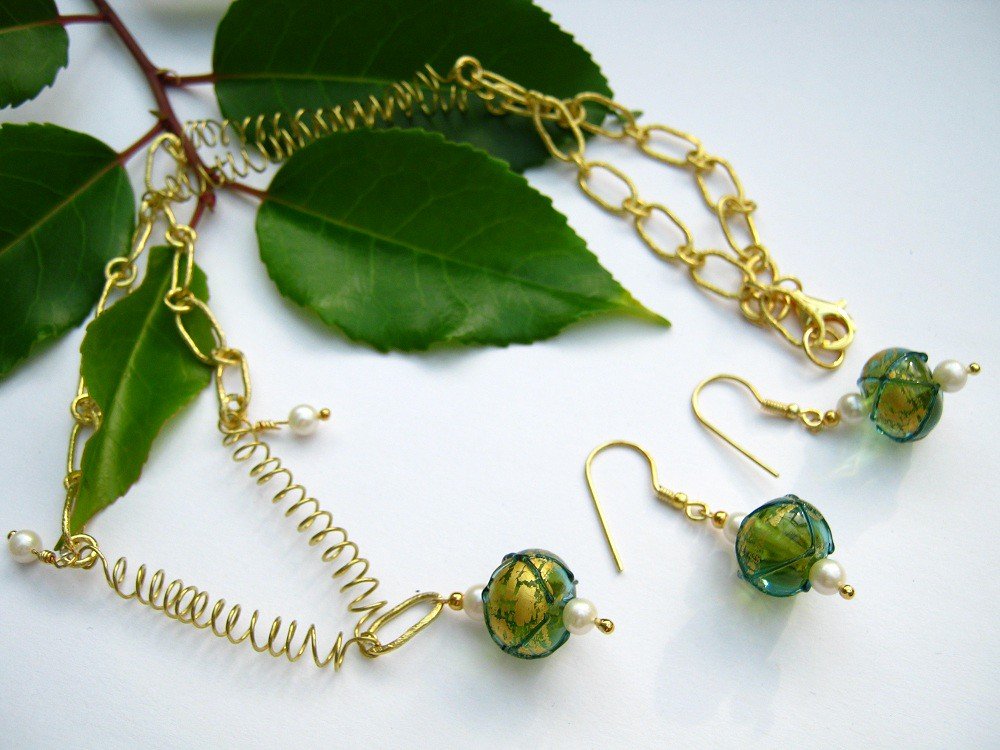
When all pieces in the set are ones you’d buy anyway. If a
three-piece set includes a necklace, bracelet, and earrings you’d
genuinely wear at similar frequency — not one clear favorite and two
afterthoughts — the set removes the coordination effort without the
usual dilution problem, since you weren’t planning to skip any of the
three pieces regardless.
When it’s specifically for gifting. As noted in our gifting guide,
a matched set solves the sizing-risk problem for at least the
adjustable pieces in the set while presenting as a complete, considered
gift rather than a single item — the presentation value of a
cohesive gift set genuinely matters differently than it does for a
purchase you’re making for your own daily rotation.
When Buying Separately Is Still the Better Choice
When you can already identify one clear favorite piece from the set.
If you’re drawn to a set primarily for one piece — the necklace, say —
and would honestly rate the bracelet and earrings as “fine, I guess,”
that’s the exact dilution scenario our capsule jewelry-box guide warns
against, and buying just the necklace individually is the better use of
budget.
When the set locks you into a specific piece count you don’t need.
If a set includes a ring alongside a necklace and earrings, but sizing
uncertainty (per our jewelry-sizing guide) means the ring is a genuine
risk, buying the necklace and earrings separately and skipping the
sizing risk on the ring entirely is usually the smarter path, even if it
means paying a slightly higher per-piece rate for the two you do want.
When you already own pieces the set would duplicate. If you already
have a well-matched everyday necklace and earring pair, a new three-piece
set built around a similar daily-wear register doesn’t add much beyond
what you already own — the set logic works best when filling a genuine
gap in your collection, following the same priority-order thinking from
our capsule jewelry-box guide, rather than duplicating a tier you’ve
already built out.
A Practical Decision Test
Before buying a set, mentally price out each individual piece within it
and ask honestly whether you’d choose to buy each one on its own at that
price. If the answer is yes for all pieces, the set is a legitimate,
efficient purchase. If the answer is no for even one piece, you’re
likely paying for dilution rather than genuine value, and buying the
pieces you actually want separately — even at a slightly higher combined
cost — is usually the better outcome.
Frequently Asked Questions
Does buying a set ever save meaningful money compared to buying pieces
individually?
Often yes, on a pure price basis — bundled pricing is common. The
guidance above isn’t about whether sets are priced fairly, but whether
the bundle actually matches what you’d choose to wear; a discount on
pieces you won’t wear isn’t genuine savings.
Is it reasonable to buy a set and simply not wear one piece from it?
Yes, if the discount on the two pieces you do want still makes financial
sense compared to buying them individually — but it’s worth doing that
comparison explicitly rather than assuming the set is automatically the
better deal.
How do I know if a set genuinely solves the finish-matching problem
versus just claiming to?
Check whether the listing explicitly states the pieces share identical
plating/finish specifications (not just “coordinating” or “complementary”
language, which can describe a looser match), similar to the specificity
check recommended in our product-review-reading guide.