For years, the standard jewelry advice was simple: pick a metal — gold or
silver — and stay in it. That rule made sense when jewelry was mostly
about matching to an outfit’s obvious dominant color. It doesn’t reflect
how jewelry is actually worn now, where mixed-metal stacking has become
the norm rather than an exception in celebrity styling. The problem is
that “you can mix metals now” isn’t actually useful advice on its own —
mixed metals done deliberately looks intentional, and done carelessly
looks like you ran out of matching pieces. Here’s the actual distinction.
Why the Old Rule Existed in the First Place
The all-one-metal rule wasn’t arbitrary — it existed because unintentional
metal mixing genuinely used to look like a mistake, mostly because older
jewelry manufacturing made mismatched finishes more visually jarring than
they are now. A bright, highly polished gold piece next to a bright,
highly polished silver piece creates real visual competition — two
different reflective surfaces both trying to catch light at once, which
reads as cluttered rather than curated.
Modern finishes have moved away from high-polish as the default, though,
which is exactly what makes mixed-metal stacking work now in a way it
didn’t a decade ago.
The Actual Rule: Match Finish, Not Metal Color
The real distinction that determines whether mixed metals work isn’t
gold-versus-silver — it’s finish consistency. A brushed matte gold
piece and a brushed matte silver piece sit together far more comfortably
than two high-polish pieces in the same metal color, because the shared
matte finish does the visual “these belong together” work that matching
metal color used to do.
This is why a lot of current jewelry lines deliberately offer the same
piece in both a brushed gold and brushed silver finish — not so you pick
one, but so you can buy both and wear them together, using finish
consistency to unify what would otherwise be two competing metals.
Where to Start If You’re New to Mixing
The lowest-risk entry point is rings, specifically because hands
naturally show multiple pieces close together without requiring outfit
coordination the way a necklace does. A stack of three or four rings —
some gold, some silver, all in a consistent brushed or matte finish —
is the single easiest way to test whether mixed metals work for you
before committing to it in necklaces or bracelets, where the visual
stakes (and cost) are higher.
From there, bracelets are the next step, followed by necklaces last —
partly because necklace layering already has its own set of proportion
rules (length, chain thickness) to manage, and adding metal-mixing on top
of that is a lot to coordinate for a first attempt.
The One Combination That Rarely Works
Mixing a high-polish piece in one metal with a matte piece in the other
metal is the combination most likely to look accidental rather than
intentional — it reintroduces the exact visual competition the old
matching rule was designed to avoid, just across two metals instead of
one. If you’re going to mix, commit to a consistent finish across
everything you’re wearing, regardless of which metal color each specific
piece is.
Building a Mixed-Metal Starter Set
If you’re starting from scratch rather than retrofitting an existing
jewelry box, look specifically for a brand or collection that explicitly
offers matching finishes across both metal colors — this guarantees
consistency rather than requiring you to color-match finishes across
different manufacturers, which is harder to judge from product photos
alone.
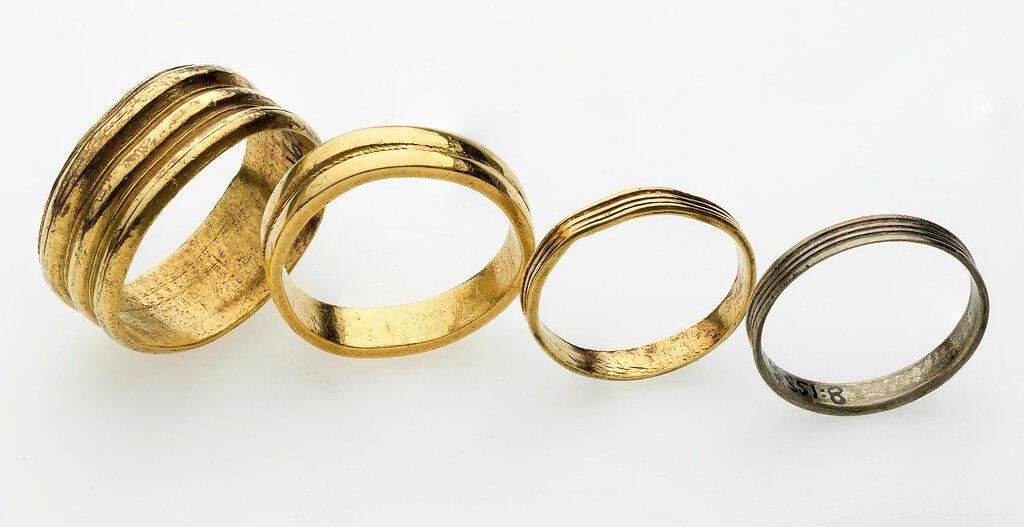
A practical starter set: one gold and one silver ring in the same
brushed finish, worn together on the same hand; a single gold chain
bracelet and a single silver bangle worn on the same wrist; and, once
you’re comfortable with both, a necklace in whichever metal you gravitate
toward more, worn alone rather than mixed, since necklaces are the
hardest place to mix successfully as a beginner.
Frequently Asked Questions
Do I need to buy everything in matching finishes from one brand?
Not strictly, but it’s the easiest way to guarantee consistency. If
buying from different sources, hold pieces next to each other in
person (or compare close-up photos) before assuming two “brushed gold”
listings from different brands actually match in tone.
Does this apply to fine jewelry the same way it applies to fashion
jewelry?
Yes — the finish-matching principle holds regardless of price point.
Solid gold and sterling silver pieces mix exactly as successfully as
fashion jewelry, provided the finish (polished vs. brushed vs. hammered)
is consistent.
What’s the easiest single mixed-metal purchase to start with?
A two-ring set explicitly sold as a mixed-metal pair — many jewelry
lines now sell exactly this, which removes the guesswork of matching
finishes yourself.