Bracelet stacking looks effortless in finished photos, but it’s actually
one of the more failure-prone layering categories — more so than
necklace layering, since bracelets move constantly with the wrist in a
way necklaces don’t, creating far more opportunity for tangling and
material wear against each other. Here’s a practical system that
addresses the actual mechanics of why bracelet stacks fail.
Order Rigid Pieces Toward the Hand, Soft Pieces Toward the Elbow
The most reliable stacking order places rigid, fixed-shape pieces
(bangles, cuffs) closest to the hand and softer, more flexible pieces
(chain bracelets, beaded pieces) further up toward the elbow. This isn’t
arbitrary — rigid pieces near the hand move less relative to each other
during normal activity, reducing the friction-based wear covered in our
jewelry care-routine guide, while the more flexible pieces higher up
have more room to move without directly grinding against a rigid
neighbor.
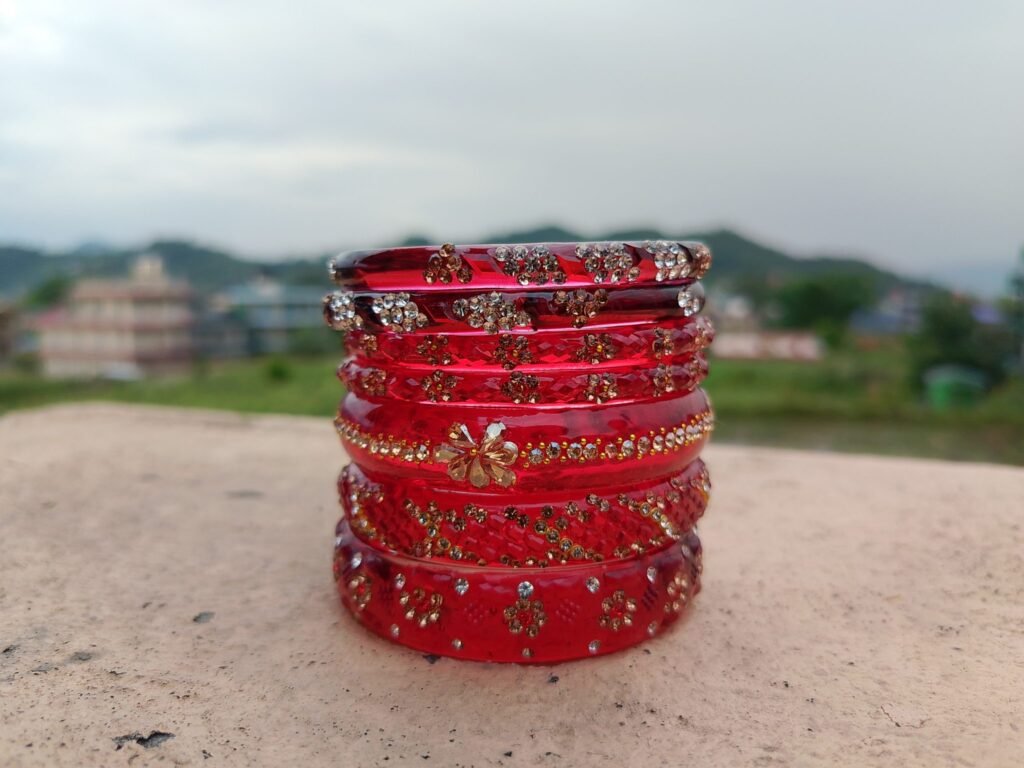
Stacking multiple rigid bangles together, by contrast, is the
combination most likely to produce audible clicking and visible surface
scratching over time, since rigid pieces have no give to absorb contact
with each other.
Vary Width, Not Just Style, to Prevent Tangling
Chain bracelets of very similar link size and length are the most likely
combination to tangle into each other during normal wrist movement,
since similarly-sized links can interlock more easily than
mismatched ones. Choosing chain bracelets with visibly different link
sizes, or spacing a chain bracelet away from another chain piece with a
solid bangle or cuff in between, reduces this significantly more than
choosing pieces based on style alone.
Apply the Same Finish-Consistency Rule as Necklace Layering
The metal-matching guide’s finish-consistency principle applies
directly to bracelet stacking — a mix of brushed matte and high-polish
pieces in the same stack tends to look less intentional than a stack
with consistent finish throughout, for the same visual-competition
reasons covered in that guide. This matters slightly more for bracelets
than for necklaces, since a bracelet stack sits together in one
continuous visual unit on the wrist, making finish inconsistency more
immediately noticeable than it would be across necklaces layered at
different lengths.
How Many Pieces Is Actually Too Many
Beyond four or five pieces per wrist, most bracelet stacks start reading
as cluttered rather than intentionally layered, and the practical
tangling risk increases substantially with each additional piece. If
you’re new to bracelet stacking, starting with two or three pieces —
one rigid bangle, one chain bracelet, optionally one bead or textured
piece — is a safer entry point than attempting a full five-plus-piece
stack immediately.
Pairing With a Watch
If you wear a watch, it functions as an additional rigid piece in the
stacking order and is generally best positioned as the piece closest to
the hand, with softer bracelet pieces layered above it, following the
same rigid-near-hand logic covered above. A watch stacked in the middle
of a bracelet arrangement, rather than at the base, is more prone to
the strap or band catching against adjacent pieces during wrist
movement.
What to Do If a Chain Genuinely Tangles
For fine chain bracelets specifically prone to tangling despite proper
spacing, the same straw-threading trick from our jewelry travel-packing
guide works for storage between wears, not just for travel — keeping
chains separated when not being worn prevents them from developing a
tangled resting state that then re-tangles every time they’re put back
on.
Frequently Asked Questions
Does the rigid-near-hand rule apply the same way for both wrists, or
only a dominant hand?
The same principle applies to either wrist — it’s based on general wrist
movement patterns during normal activity, not handedness specifically.
Is it acceptable to mix gold and silver bracelets in the same stack?
Yes, following the same mixed-metal principles from our metal-matching
guide — consistent finish (all brushed or all polished) matters more
than metal color consistency for making a mixed stack look intentional.
How do I know if a specific stack combination is causing excessive
wear versus normal use?
Check periodically for scratching on the inner surfaces of rigid pieces
specifically, since that’s the most visible sign of pieces grinding
against each other — if you notice new scratching after wearing a
specific combination, that’s a signal to rearrange the stacking order or
add spacing between the pieces causing the contact.