Glasses change the practical calculus for face-adjacent jewelry more
than most style guides acknowledge — they add a permanent frame around
the eyes that interacts with earrings specifically, and understanding
that interaction produces better choices than applying generic face-
shape jewelry advice without accounting for the glasses already framing
the face.
Why Earrings Need to Work With the Frame, Not Just the Face
The contrast-and-continuation proportion principle from our earring
face-shape guide still applies, but glasses add a second shape
consideration layered on top of face shape — the frame itself has its
own geometry (round, square, cat-eye, rectangular) that earrings sit
near and interact with visually, not just the underlying face shape.
An earring shape chosen purely against face shape, ignoring frame shape
entirely, can end up competing with or clashing against the glasses
rather than working with the fuller picture of face plus frame together.
Matching or Contrasting With Frame Shape
The same contrast principle applies here in a modified form: angular
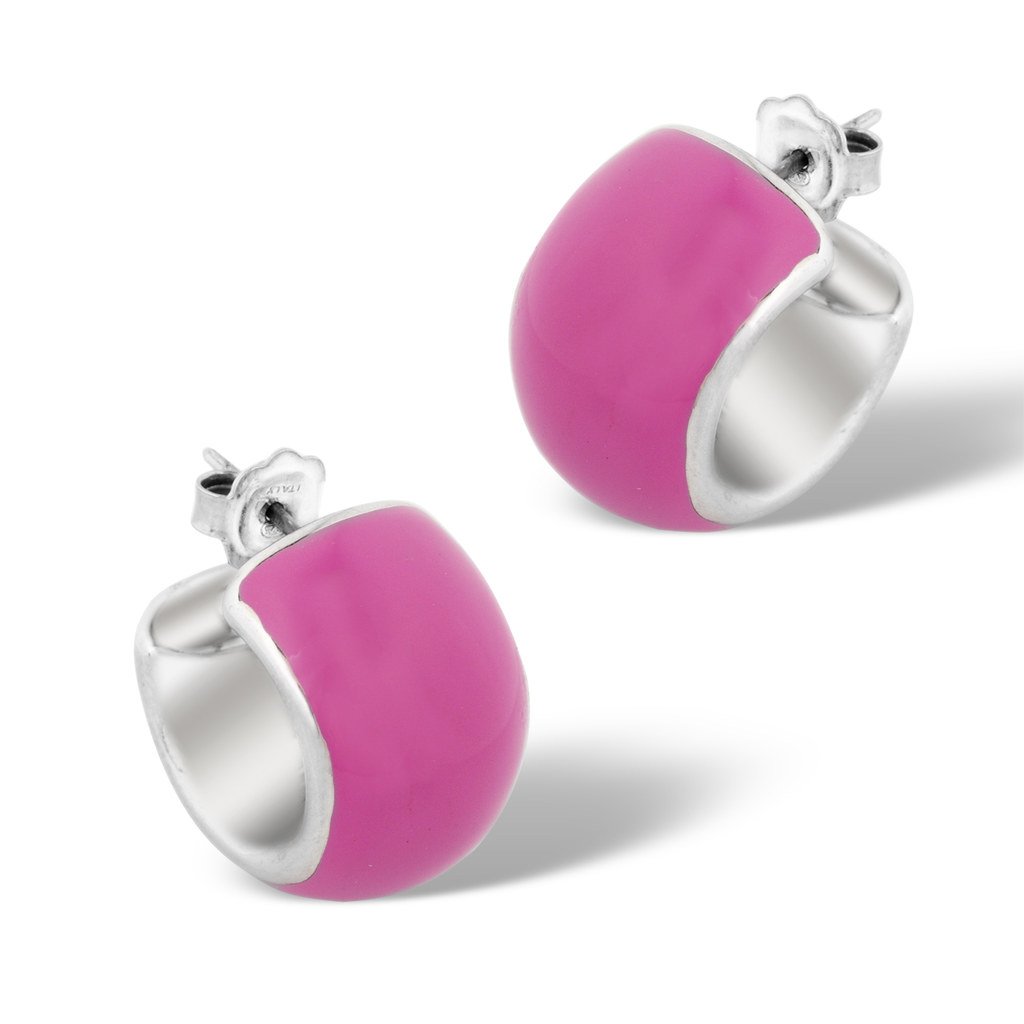
glasses frames are often complemented by rounder earring shapes (small
hoops or huggie styles), providing the same balancing contrast covered
in our general earring guide, while rounder or more delicate frames
have more flexibility to pair with either soft or more geometric earring
shapes without a strong single frame shape to react against.
Frame Material and Color Affects Metal Tone Choices
Glasses frame material and color interact with jewelry metal tone in a
similar way to the undertone considerations from our gold-versus-silver
guide, just with an additional, highly visible reference point sitting
directly on the face. Gold-toned or tortoiseshell frames generally pair
more naturally with warm-toned jewelry metals, while silver, black, or
cooler-toned frames pair more naturally with cooler metal tones — worth
factoring in specifically because glasses are worn constantly and in
close proximity to earrings, more so than most other jewelry-adjacent
context.
Practical Fit Issues Specific to Glasses Wearers
Beyond styling, glasses create genuine practical fit considerations that
don’t apply to non-glasses-wearers: certain earring styles, particularly
larger hoops or drop earrings with a wide swing range, can catch on
glasses temple arms during normal head movement, which is a real,
checkable annoyance rather than a purely aesthetic consideration. Huggie
hoops and stud earrings sit closer to the ear and largely avoid this
interaction, making them a more practically reliable everyday choice for
regular glasses wearers specifically, beyond their general daily-wear
appeal covered in our capsule jewelry-box guide.
Necklaces Are Less Affected, But Not Entirely
Necklace choice interacts with glasses less directly than earrings do,
since glasses sit on the face rather than near the neckline — but for
anyone who also wears a glasses chain or cord (increasingly common
alongside blue-light or reading glasses used intermittently throughout
the day), layering a necklace with a glasses chain requires the same
tangle-prevention thinking from our necklace-layering and bracelet-
layering guides, since two chains around the neck can tangle just as
easily as two bracelets on a wrist.
Building a Glasses-Compatible Daily Jewelry Set
A practical daily set for regular glasses wearers: small huggie hoops or
studs (avoiding the temple-arm-catching issue above), a necklace chosen
independently of frame shape since it’s less directly affected, and a
metal tone chosen to complement frame color/material specifically,
following the warm/cool logic above. This is a straightforward
modification of the general daily-wear basics tier from our capsule
jewelry-box guide, adjusted for the practical and visual realities of
wearing glasses continuously.
Frequently Asked Questions
Do sunglasses interact with earrings the same way prescription glasses
do?
Yes, generally the same considerations apply — the temple-arm-catching
issue and frame-shape-contrast principle both transfer directly from
prescription glasses to sunglasses, since the physical structure at the
ears is functionally similar.
Should someone who only wears glasses part-time (reading glasses, for
instance) still apply this guidance?
It’s worth considering for earring choice on days when glasses will be
worn for extended periods, but someone who only wears glasses briefly
throughout the day has more flexibility to choose earrings based on
general face-shape guidance alone, without needing to prioritize the
glasses-specific fit considerations as heavily.
Does frame shape matter more than frame color for jewelry
coordination?
Both matter, but for different reasons — frame shape affects the
earring-shape contrast principle, while frame color affects the metal-
tone warm/cool coordination; a complete approach considers both rather
than prioritizing one over the other.