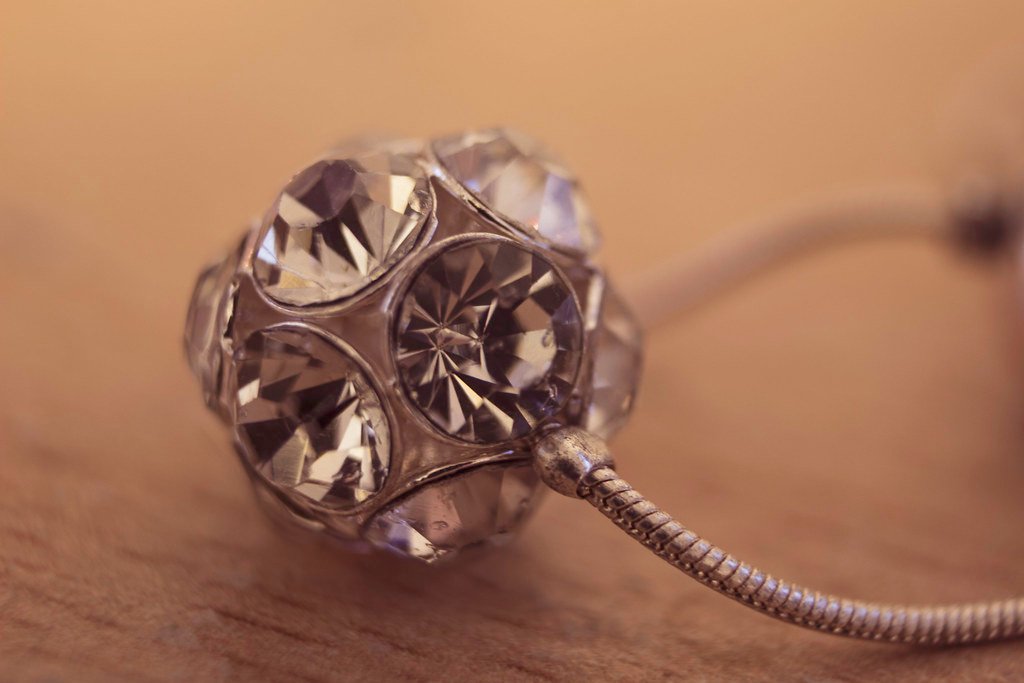
Diamond simulants — materials like cubic zirconia and moissanite that
visually resemble diamonds without being chemically identical — are
completely legitimate products in their own right, covered honestly
throughout our other guides as a reasonable choice for statement
pieces. The actual problem is listings that blur the line between
simulant and genuine diamond through vague or misleading language,
making it harder to know exactly what you’re paying for. Here’s how to
read a listing accurately.
The Specific Words That Actually Matter
“Diamond-cut,” “diamond-style,” and “diamond-inspired” are marketing
phrases describing a cutting style or aesthetic, not a material claim
— none of them mean the stone is an actual diamond, regardless of how
prominently “diamond” appears in the listing title. This is a common
and largely legal marketing practice, but it relies on many buyers not
parsing the language carefully, similar to how “gold-plated” versus
“gold vermeil” gets glossed over in casual listing-reading, per our
jewelry brand comparison guide.
The terms that actually indicate a genuine diamond are specific and
should appear clearly: “natural diamond,” “lab-grown diamond” (still a
genuine diamond, chemically identical to a mined one, just grown rather
than extracted), or a specific carat weight paired with clarity and
color grading (like “VS1 clarity, G color”). The absence of this kind of
specific grading language on a listing claiming to be a genuine diamond
is itself a red flag worth investigating further before buying.
Price Is the Most Reliable Practical Signal
Genuine diamonds, even small ones, carry a price floor that simulants
don’t approach — a “diamond” ring priced dramatically below what a
comparable genuine stone would cost, even accounting for a discount
sale, should be treated as almost certainly a simulant regardless of
what the listing title claims. This is the single fastest practical
check available to most buyers without specialized equipment, since
material cost differences between genuine diamonds and simulants are
large enough that pricing rarely disguises the difference completely.
Moissanite Deserves Its Own Mention
Moissanite is a specific, real gemstone (not a diamond, but not a lesser
“fake” either) that’s increasingly marketed on its own merits rather
than purely as a diamond substitute, given its own distinct optical
properties (notably, more colorful light dispersion than diamond). A
listing that clearly states “moissanite” is being straightforwardly
honest about material, in the same way a listing clearly stating “cubic
zirconia” is — the actual concern is listings that obscure which
specific simulant is used behind vague “diamond-style” language rather
than naming the material plainly.
Certification Documentation for Genuine Diamonds
For any claimed genuine diamond purchase above a modest price point, a
grading certificate from a recognized independent gemological laboratory
should be available, separate from the seller’s own listing claims. The
absence of third-party certification on a higher-priced claimed-diamond
listing is worth treating with real caution, similar to the
authentication-documentation concern covered in our secondhand designer
buying guide — a confident listing description isn’t a substitute for
independent verification, especially at a price point where the
distinction meaningfully matters financially.
Where This Matters Less
For lower-priced fashion jewelry throughout our own Affiliate Picks
catalog — the tennis bracelet and necklace picks, for instance — cubic
zirconia is clearly the expected material at that price point, and this
concern about misleading “diamond” language mostly applies to listings
positioned as genuine diamond jewelry at a price point where the
distinction actually carries financial weight, not to openly-marketed
fashion jewelry using simulants at an appropriately low price.
A Practical Checklist Before Buying
Read the listing specifically for grading language (carat, clarity,
color) rather than just the word “diamond” in the title. Check the price
against a rough sense of genuine diamond pricing at that size — if it
seems too good to be true relative to known diamond pricing, it likely
is. Request or look for independent certification on any higher-value
claimed-diamond purchase. If a listing uses hedging language like
“diamond-style” or “diamond-inspired,” read that as a simulant, not
genuine diamond, regardless of how the title is otherwise phrased.
Frequently Asked Questions
Is buying a diamond simulant a bad choice, assuming the listing is
honest about what it is?
Not at all — as covered in our fashion-versus-fine jewelry guide,
simulants are a completely legitimate choice for statement pieces where
visual impact matters more than resale value or long-term investment.
The concern here is purely about listing honesty, not simulants
themselves.
How does lab-grown diamond fit into this — is it a simulant or a real
diamond?
A genuine diamond — chemically and optically identical to a mined
diamond, just produced differently. It’s not a simulant, and reputable
listings should clearly distinguish “lab-grown diamond” from both
“natural diamond” and simulant materials like moissanite or cubic
zirconia.
Can an untrained eye tell the difference between a genuine diamond
and a high-quality simulant just by looking?
Generally no, especially in photos — this is exactly why listing
language and independent certification matter more than visual judgment
for this specific purchase decision.